BES-2026

Join leading experts, researchers, and professionals at the forefront of innovation in the battery and energy storage sectors at BES-2026, taking place June 29–July 01, 2026, in London, UK.
Image
About Event

Welcome to International Conference on Battery and Energy Storage (BES-2026)

Join leading experts, researchers, and professionals at the forefront of innovation in the battery and energy storage sectors at BES-2026, taking place June 29–July 01, 2026, in London, UK.
BES-2026 offers a dynamic platform for knowledge exchange, collaboration, and exploration of cutting-edge technologies. This year’s conference is designed to identify and address current trends, opportunities, and challenges shaping the future of the battery and energy storage industry.
Currently, lithium-ion battery technology is the cornerstone of energy storage, offering high specific energy, power density, and cycle life. These systems are widely deployed across electric vehicles, portable electronics, and increasingly for grid-scale applications.

BES-2026

Key Highlights

Collaboration at the Core
BES-2026 is dedicated to bridging the gap between academia and industry, facilitating partnerships that accelerate research and development in Cell and Gene Therapy.
Register
Networking Opportunities
Connect with leading researchers, industry experts, and decision-makers to explore collaborations, funding opportunities, and strategic partnerships.
Register
Cutting-edge Research
Gain insights into the latest discoveries and advancements in Cell and Gene Therapy through keynote presentations, panel discussions, and interactive sessions.
Register
Industry Impact
Learn how academic research can translate into practical applications that impact the industry, paving the way for transformative therapies and treatments.
Register
Scientific Sessions

Key Symposia and Sessions

  • Lithium-Based Systems: Li-ion, Li-S, and Li-air battery technologies
  • Post-Lithium Alternatives: Sodium-ion and Zinc-based battery chemistries
  • Solid-State Batteries: Advances in solid electrolytes and interface design
  • Flow Batteries: Redox flow systems for grid-scale applications
  • Legacy Chemistries: Nickel-metal hydride (NiMH) and lead-acid in industrial use

  • Next-Gen Chemistries: Quantum batteries, aqueous systems, ultracapacitors
  • Materials Innovation: Nanoscale materials, advanced electrolytes, novel binders
  • Nanostructured Designs: Nanomaterials, quantum materials, high-surface electrodes
  • Solid-State Advancements: Solid electrolytes and interfacial engineering
  • Supercapacitors & Hybrid Systems: High power-density storage technologies

  • Battery End-of-Life Management: Collection, diagnostics, and lifecycle tracking
  • Second-Life Applications: Repurposing batteries for stationary storage
  • Recycling Methods: Pyrometallurgy, hydrometallurgy, direct recycling
  • Regulatory Frameworks: Circular economy strategies and global mandates
  • Environmental Impact: ESG metrics and carbon footprint assessments

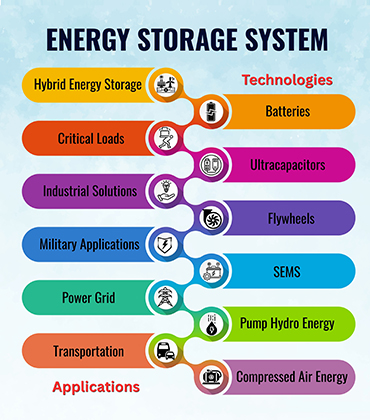
  • Mechanical Storage Types: Pumped hydro, CAES, gravity-based systems
  • Thermal Storage Systems: Molten salts, ice-based, and phase change materials
  • Flywheel Energy Storage: High cycle-life applications
  • Integration Scenarios: Industrial and grid-level use cases
  • System Efficiency: Energy losses, cycling stability, and cost trade-offs

  • Green Hydrogen Production: Electrolysis, efficiency, and water sourcing
  • Hydrogen Storage: Compressed, liquid, and solid-state storage methods
  • Power-to-X Pathways: Conversion to fuels, chemicals, and back to power
  • Long-Duration Storage: Role of hydrogen in seasonal energy balancing
  • Infrastructure and Transport: Pipelines, fuel cells, and ammonia pathways

  • AI & Predictive Control: System optimization, fault prediction, and diagnostics
  • Smart Grids & Microgrids: Role of storage in decentralized systems
  • Virtual Power Plants (VPPs): Aggregation and control of distributed assets
  • EV & Grid Synergies: V2G (Vehicle-to-Grid), V2H, and bidirectional charging
  • Multi-Service Storage: Frequency regulation, peak shaving, load shifting

  • Critical Materials: Lithium, cobalt, nickel, and supply chain vulnerabilities
  • Manufacturing Innovations: From lab to fab, automation, and quality control
  • Electrode Components: Cathodes (LFP, NMC), anodes (graphite, silicon)
  • Electrolyte Types: Solid, gel, and ionic liquids for high-performance cells
  • Assembly & Processing: Coating, calendaring, pouch/prismatic/cylindrical cells

  • Technology Spectrum: Flow batteries, NaS, hybrid storage systems
  • Bulk Energy Storage: Mechanical, thermal, and hydrogen for load balancing
  • Siting and Operation: Sizing, deployment strategies, and regulation
  • System Cost & Economics: CapEx/OpEx analysis and levelized cost of storage
  • Resilience & Redundancy: Multi-day storage for blackout protection

  • Thermal Management: Heat control systems and failure prevention
  • BMS Design: Real-time diagnostics, lifecycle tracking, and AI-based monitoring
  • Testing Protocols: Cycle life, capacity retention, abuse testing
  • Fast Charging Risks: Degradation, overheating, and safety concerns
  • Regulatory Standards: Certification, compliance, and safety protocols

  • Regulatory Landscape: Standards, permits, and incentives
  • Business Models: ESaaS, leasing, utility partnerships, revenue stacking
  • Market Trends: Global deployment, regional growth drivers
  • Financing Mechanisms: Auctions, green bonds, and carbon markets
  • Policy Instruments: Storage mandates, capacity payments, and subsidies
Pre-Early Bird Registration

Register

Academic
$ 799
  • Welcome Coffee
  • Conference Material
  • Lunch, tea/coffee breaks
  • WiFi in meeting rooms
Industry
$ 1049
  • Welcome Coffee
  • Conference Material
  • Lunch, tea/coffee breaks
  • WiFi in meeting rooms
Student
$ 599
  • Welcome Coffee
  • Conference Material
  • Lunch, tea/coffee breaks
  • WiFi in meeting rooms